
Most Recent

Low-cost food pantry awarded £272k lottery grant
Oasis Hub Bath said the funding will cover its main operating costs over the next three years.
HKMA warns of uncertainties after raising rates
The chief executive of the Hong Kong Monetary Authority (HKMA), Eddie Yue, on Thursday warned about considerable uncertainties over the city's future borrowing costs, though he noted the SAR's bad debt ratio had remained stable. This came after the city's de facto central bank raised its base rate by a quarter of a percentage point to 4.25 percent, hours after the US Federal Reserve lifted its target range by the same margin to between 3.75 percent and four percent. HSBC, Bank of China (Hong Kong) and Standard Chartered announced they are keeping their lending and savings rates unchanged. The moves by the Fed and the HKMA marked their first rate hike in over three years since July 2023, when they also raised rates by 25 basis points. Speaking at a press conference, Yue noted that while the Fed's decision came in line with market expectations, it reflected US policymakers' concerns on the inflation outlook. "US interest rate adjustments are subject to considerable uncertainties, which may influence the interest rate environment in Hong Kong," he said. "The public should carefully manage interest rate risks when making financial decisions," he added. Looking ahead, he said the city's base rate outlook will depend on various factors, including the Hong Kong dollar-US dollar interest rate differential, the supply-demand conditions for the local currency, and capital market activities. On Hong Kong dollar deposit and lending rates, he said local lenders would take into consideration issues such as their own funding cost structure, as well as the local currency funding supply and demand. Yue noted US policymakers could further raise rates if the rising oil prices also affect prices of other products and services. But he stressed that the city's monetary and financial markets have continued to operate in an orderly manner, adding that the city's bad debt ratio had eased since the end of last year. "What we're seeing right now is that the property market is quite stable, including that in the commercial space, and local lenders have also offered considerable provision supports," he said. "So we can see that the bad debt ratio is gradually decreasing and stabilising. I also expect this situation to remain like this." On decisions by local banks to keep their interest rates steady, Financial Secretary Paul Chan said there's abundant money supply in the local market. "The liquidity in our banking system at the moment is still very ample. The interbank rate is about close to 1 percentage point lower than the US. So, there is really at the moment no pressure for us to raise the interest rate," he told reporters. Meanwhile, Yue said authorities are seeking to increase the gold holdings in its Exchange Fund, which serves as the financial war chest to defend the local currency. "The main reason is, of course, to reduce risks by diversifying our holdings. But other than that, we hope it could also allow us to be more actively participating in the spot and other financial products' markets," he said. "This will also help promote the development of the entire ecosystem of the Hong Kong gold market, and it's in line with the government's goal to develop gold and commodities." _____________________________ Last updated: 2026-09-17 HKT 16:53 Edited by Aaron Tam
Huawei to launch two new AI chips in 2027
Huawei Technologies will launch two new artificial-intelligence semiconductors in 2027, rotating chairman David Wang said on Thursday, as the tech giant builds up its AI computing business and seeks to challenge US chipmaker Nvidia. Huawei plans to launch the 960DT in the first quarter and the Ascend 960PR in the third quarter, he said. The company is also working on ways to connect very large numbers of AI chips, allowing them to work together as one bigger computing system. Most advanced AI programmes require more processing power than a single chip can provide. Wang said in a speech at a company event in Shanghai that Huawei's UnifiedBus technology would be a key link in the company's next generation of large AI systems. The technology is intended to help chips share information and work together more efficiently. Huawei has developed 11 semiconductors based on UnifiedBus technology for use in its large systems, he said. Its largest linked systems, which the company calls superclusters, can support up to one million AI processors, he added. Huawei has shipped more than 1,000 smaller linked systems, called supernodes, to more than 370 customers, Wang said. A supernode is a system that brings together many AI chips to tackle the same task. He did not say how many chips could be connected within a single supernode, name customers, or give a breakdown of shipments. Washington has imposed export controls that restrict China's access to certain advanced computing chips and semiconductor manufacturing equipment, while Chinese companies and policymakers have placed greater emphasis on building domestic alternatives. (Reuters) Edited by Aaron Tam
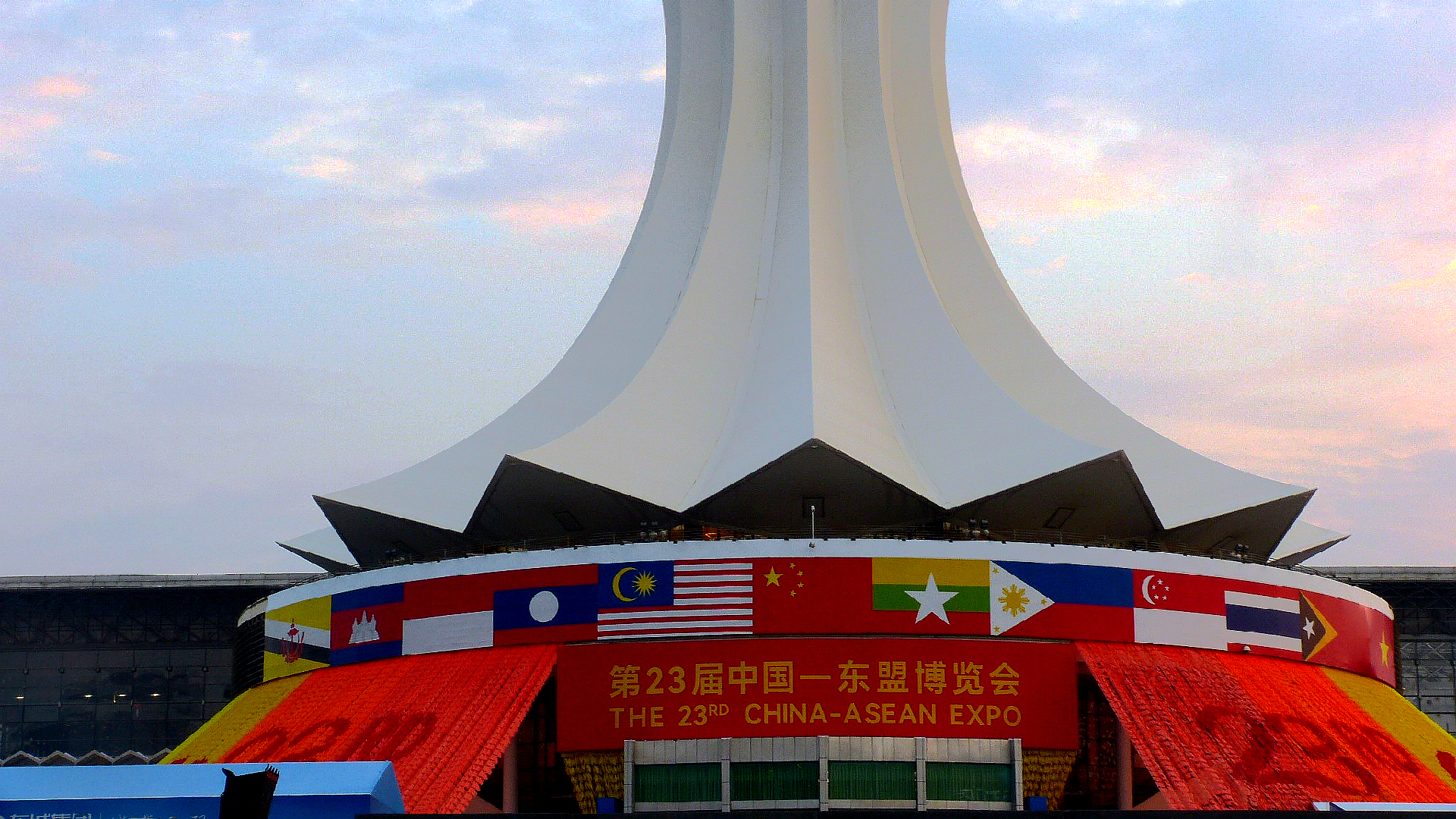
China-ASEAN Expo opens with focus on CAFTA 3.0, AI, and Pinglu Canal
The 23rd China-ASEAN Expo (CAEXPO) opened on Thursday in Nanning, capital of south China's Guangxi Zhuang Autonomous Region, highlighting new business opportunities under the China-ASEAN Free Trade Area (CAFTA) 3.0 framework.

OpenAI reveals six more safety issues and unveils plan to disclose incidents
The firm also announced a new system to track, investigate and disclose cases of models misbehaving, or "misalignment".
Hang Seng Index retreats in face of rate hike
Shares edged up in Asia on Thursday as investors bet the US Federal Reserve is finally getting the jump on inflation, delivering its first rate hike in more than three years and calming a global bond selloff that had sent long-term yields soaring. In Hong Kong, the benchmark Hang Seng Index opened down 233 points, or 0.94 percent, at 24,480. The tech index fell 44 points, or 1.03 percent, to 4,281 while the China Enterprises Index slipped 79 points, or 0.97 percent, down to 8,127. Up north, the Shanghai Composite Index opened down 14 points, or 0.38 percent, at 3,877. The Shenzhen Component Index was 44 points, or 0.33 percent, lower at 13,409 while the ChiNext Index edged down 14 points, or 0.43 percent, to 3,297. In Tokyo, the Nikkei jumped 720 points, or 1.13 percent, up to 64,643 before giving back most of its gains to be just 64 points higher at one stage before noon. In Seoul, the Kospi, like the Nikkei, was just two points up at one stage before lunch after having opened 61 points, or 0.91 percent, higher at 6,779. The regional market openings came as the US dollar hit a seven-week high against its major peers, underpinned by a jump in short-term Treasury yields as markets ramped up wagers that the Fed may have to lift rates again, with a move by December fully priced in. That proved a headwind for commodities, with oil prices giving back ground. The focus now shifts to the Bank of England, which is widely expected to leave interest rates steady later in the day, but all eyes will be on any hint about if high energy prices could force it to hike in November. The Bank of Japan, by contrast, is all but certain to lift interest rates on Friday. As widely expected, the Fed raised interest rates by a quarter point overnight, but the unanimous decision tilted to the hawkish side, with the board signalling one more rate hike this year. Goldman Sachs now expects the Fed to hike rates again in October. "We think October is the most likely time for the next move because it is most natural to deliver hikes that the Fed's open market committee presented today as supporting 'a timelier return' to the 2 percent target at consecutive meetings," said Goldman analysts in a note. "Additional hikes are possible but not our base case." Commodity markets took a hit. Brent crude futures slipped 0.7 percent to US$105.05 a barrel after falling 2.7 percent overnight as Saudi Arabia was reportedly offering crude cargoes through Oman, easing some concerns about Middle East supply disruption. (Reuters & Xinhua) Edited by Aaron Tam

The Documentary
Katy Watson explores Australia's relationship with China - partner, rival or 'frenemy'?

US interest rates raised for first time in three years
Rates were hiked in a unanimous decision despite fierce opposition from President Donald Trump, who had called for a cut.

Why Trump's hand-picked Fed chair defied him by raising interest rates
The 0.25% increase comes despite fierce opposition from the US president, who has called for rates to be cut.

EU chief backs plan for Canada to become 'associate member'
Trump, who has frequently clashed with Canada's PM, threatens to cut trade with the European Union in response to the proposal.