
Certified Mobile Gold Sorption Module In China: A Guide to Relocatable Recovery Equipment
Sep 29, 2026
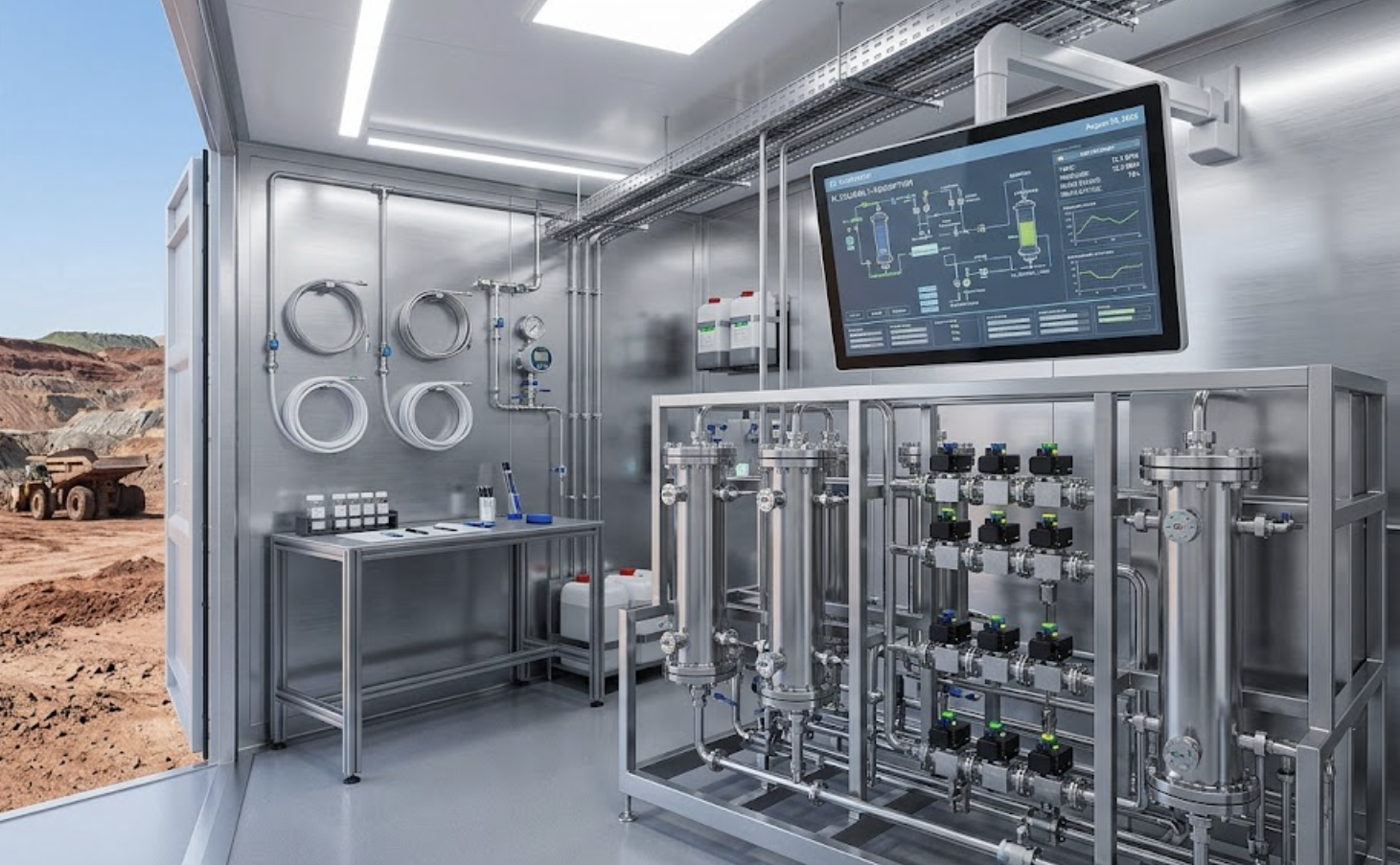
Xian, Shaanxi Sep 28, 2026 (Issuewire.com) - Global mining operators face increasing operational challenges as high-grade gold reserves diminish worldwide. Mining companies often struggle to justify the massive capital expenditure required for conventional Carbon-in-Leach (CIL) or Carbon-in-Pulp (CIP) processing plants, especially when managing satellite ore bodies, low-grade deposits, or short-life mines. A Certified Mobile Gold Sorption Module In China (https://www.seplite.com/mobile-sorption-module-for-gold-extraction/) offers a transformative engineering solution for these economic and technical hurdles. Relocatable processing units allow operators to extract precious metals efficiently without committing to permanent, capital-intensive infrastructure on remote sites. Furthermore, changing ore mineralogy presents significant operational hurdles for traditional extraction facilities. Deposits containing natural organic carbon frequently cause preg-robbing, where active carbon in the ore re-absorbs dissolved gold complexes and reduces total yield. Consequently, modern hydrometallurgy relies on flexible asset deployment and advanced material science. This guide examines how relocatable sorption equipment transforms marginal resources into profitable operations, highlighting essential design features, automated process kinetics, and strategic deployment methodologies. Core Engineering Philosophy: Key Design Pillars of Relocatable Recovery Equipment The engineering framework of modern mobile recovery units centers on structural mobility, rapid field setup, and structural standardization. Equipment manufacturers build these systems within heavy-duty skid frames that fit standard 40-foot High Cube shipping container dimensions. Therefore, standard flatbed trailers or cargo vessels can transport the machinery directly to remote mining locations without requiring specialized logistics equipment or custom freight clearance. Pre-assembly forms another critical pillar of this design philosophy. Engineers fully integrate essential sub-systems prior to factory dispatch, including solution pumps, automated flow valves, digital sensors, and centralized control panels. Factory Acceptance Testing ensures every valve, pump, and electronic system performs according to exact technical specifications before transport to the field site. As a result, site preparation requires minimal civil engineering work. Operators simply place the skid modules onto compacted ground or basic concrete pads, connect the primary fluid lines, and hook up local power generators. This plug-and-play architecture drastically reduces commissioning timelines from several months to just a few days. Moreover, the modular design allows plant operators to scale production capacity seamlessly by adding parallel sorption modules as mining operations expand. Advanced Process Technology: The Synergy of SMB Automation and SepGold Resins At the technological core of modern recovery systems lies Simulated Moving Bed continuous sorption equipment. Traditional batch systems require manual resin transfer and intermittent shutdown cycles. In contrast, Simulated Moving Bed technology keeps physical resin columns fixed while automated valve switching cyclically shifts fluid flow pathways across multiple operating stages. The operational cycle continuously manages five distinct process phases: Gold sorption from pregnant leach solution Backwashing to remove accumulated suspended solids Upgrading gold loading on target material Countercurrent desorption for efficient gold stripping Final resin washing prior to re-entering the sorption cycle Specialized synthetic materials enhance this automated process. Advanced solutions for enhancing gold recovery with SepGold resin-based technology (https://www.seplite.com/enhancing-gold-recovery-with-sepgold-resin-based-technology/) utilize Seplite gold-selective ion exchange resins specifically engineered to capture gold cyanide complexes such as Au(CN)2-. Unlike activated carbon, these synthetic resins bind gold ions securely at specific functional sites, preventing gold loss caused by preg-robbing carbonaceous matter in the ore. Furthermore, field reports demonstrate that synthetic resins perform reliably under variable feed conditions. Energy efficiency represents another crucial advantage of resin systems. While activated carbon requires energy-intensive thermal regeneration at high temperatures, synthetic resins undergo desorption under ambient temperatures and atmospheric pressures. This operational characteristic significantly cuts power consumption and lowers overall operating expenditure. Versatile Field Applications: Adapting to Diverse Global Mining Environments Relocatable sorption modules serve various hydrometallurgical operations across diverse geographical terrains. In heap leaching and vat leaching projects, these units process filtered pregnant leach solution directly at the leach pad boundary. The compact footprint enables placement adjacent to solution ponds, minimizing expensive pipeline construction over long distances. Additionally, mobile equipment offers ideal capabilities for processing legacy mine tailings and historical waste dumps. Many older operations discarded low-grade material that remains profitable under current gold prices and modern resin kinetics. Operators can deploy mobile modules to process these resources on-site and move equipment to new locations once tailings remediation completes. Remote and off-grid mining sites benefit greatly from automated operational controls. Designed for stable continuous performance, the modules operate efficiently with minimal manual intervention. Typical operating parameters achieve notable efficiency. For example, processing pregnant solutions with gold concentrations around 1.08 grams per cubic meter at pH 10.3 and flow rates near 80.4 cubic meters per hour yields sorption recovery rates up to 90 percent. Such performance metrics demonstrate how relocatable systems deliver industrial-scale output within a portable footprint. Why Partner with Sunresin? Vertically Integrated EPC and Quality Assurance in China Selecting the right technology provider determines the commercial success of modular mining projects. A pioneer in synthetic material synthesis and separation equipment is Sunresin (Sunresin New Materials Co. Ltd.) (https://www.seplite.com/sunresin-profile/). As a publicly listed enterprise (Stock Code: 300487), the company maintains full vertical integration, encompassing custom resin synthesis, equipment fabrication, and full-scale engineering delivery. Sunresin designs and manufactures specialized Seplite resins while simultaneously engineering skid-mounted hardware. This complete integration eliminates compatibility issues between chemical media and mechanical equipment. Furthermore, Sunresin New Materials Co. Ltd. delivers comprehensive Engineering, Procurement, and Construction services to global clients. Their engineering team conducts initial metallurgical testing, formulates site-specific flowsheets, fabricates custom modules, and oversees site startup. Quality control remains central to manufacturing operations across every production facility. Strict ISO quality management systems govern every stage of production, from raw material inspection to final module testing. Advanced manufacturing facilities ensure that every column, valve, and sensor meets stringent international standards, giving mining operators complete confidence in remote field environments. Strategic Buyer's Roadmap: How to Select and Deploy the Ideal Mobile Sorption Module When evaluating mobile extraction equipment, procurement teams should follow a structured decision framework. First, engineers must conduct detailed water chemistry and ore mineralogy analyses. Identifying the presence of preg-robbing agents, base metal contaminants, and slurry solid content determines the required resin selectivity and column sizing. Second, logistics and infrastructure constraints require careful assessment. Buyers should confirm trailer dimensions, road weight limits, and site power availability. Choosing containerized equipment built to standard transport dimensions avoids costly shipping delays and custom permit requirements. Finally, partnering with an experienced EPC provider ensures long-term operational viability. Beyond initial equipment delivery, ongoing technical support, spare parts availability, and resin lifecycle management safeguard the investment over time. Detailed product options, technical specifications, and global service capabilities are accessible directly through the official website: https://www.seplite.com/. By combining relocatable modular design with advanced resin chemistry, mining enterprises can unlock value from complex deposits, lower operational risks, and achieve sustainable gold recovery across the globe.
Source :Sunresin New Materials Co. Ltd.
This article was originally published by IssueWire. Read the original article here.
More News


Recommended



Why UK diesel prices have hit an all-time high

UK diesel price hits all-time high, the RAC says

UK tries to stop Trump's diesel export ban

YOUR NEWS, OUR NETWORK.
Do you have Great News you want to tell the world?
Be it updates about your business or your community, you can make sure that it’s heard by submitting your story to our network reaching hundreds of news sites across 6 verticals.